


Offer
Central Ticketing Device Management System - MTM
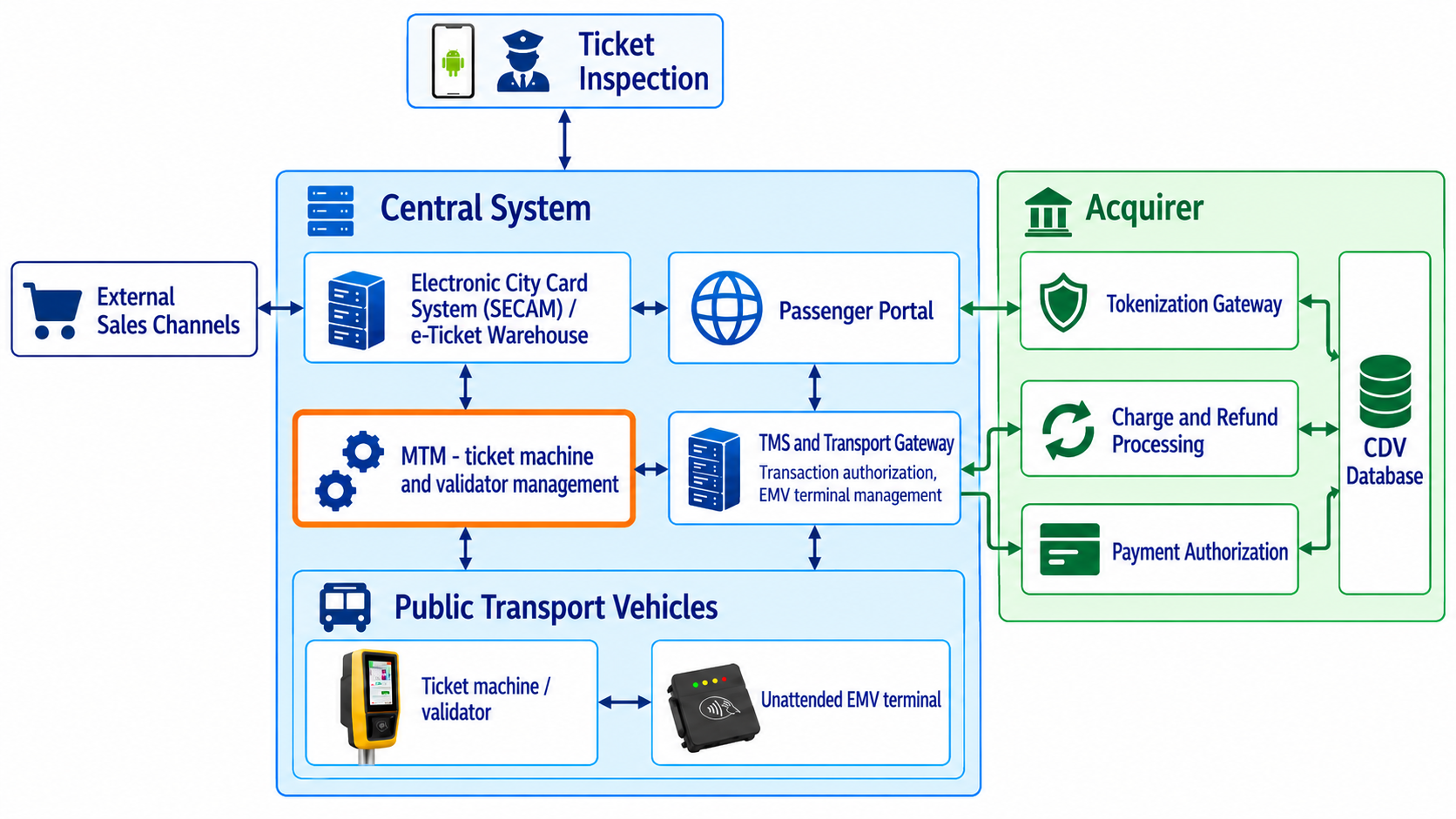
MTM (Mobile Ticket Machines) is a central system designed for the management, monitoring, and remote operation of ticketing devices, including validators and ticket vending machines installed in public transport vehicles. The platform enables devices and their components to be supervised within a single environment, while also supporting sales management, fare configuration, system settings, service operations, and content distribution.
The system was designed for transport operators and authorities that require up-to-date information about the condition of ticketing infrastructure and the ability to respond quickly and remotely, without the need for on-site service intervention in the vehicle each time.
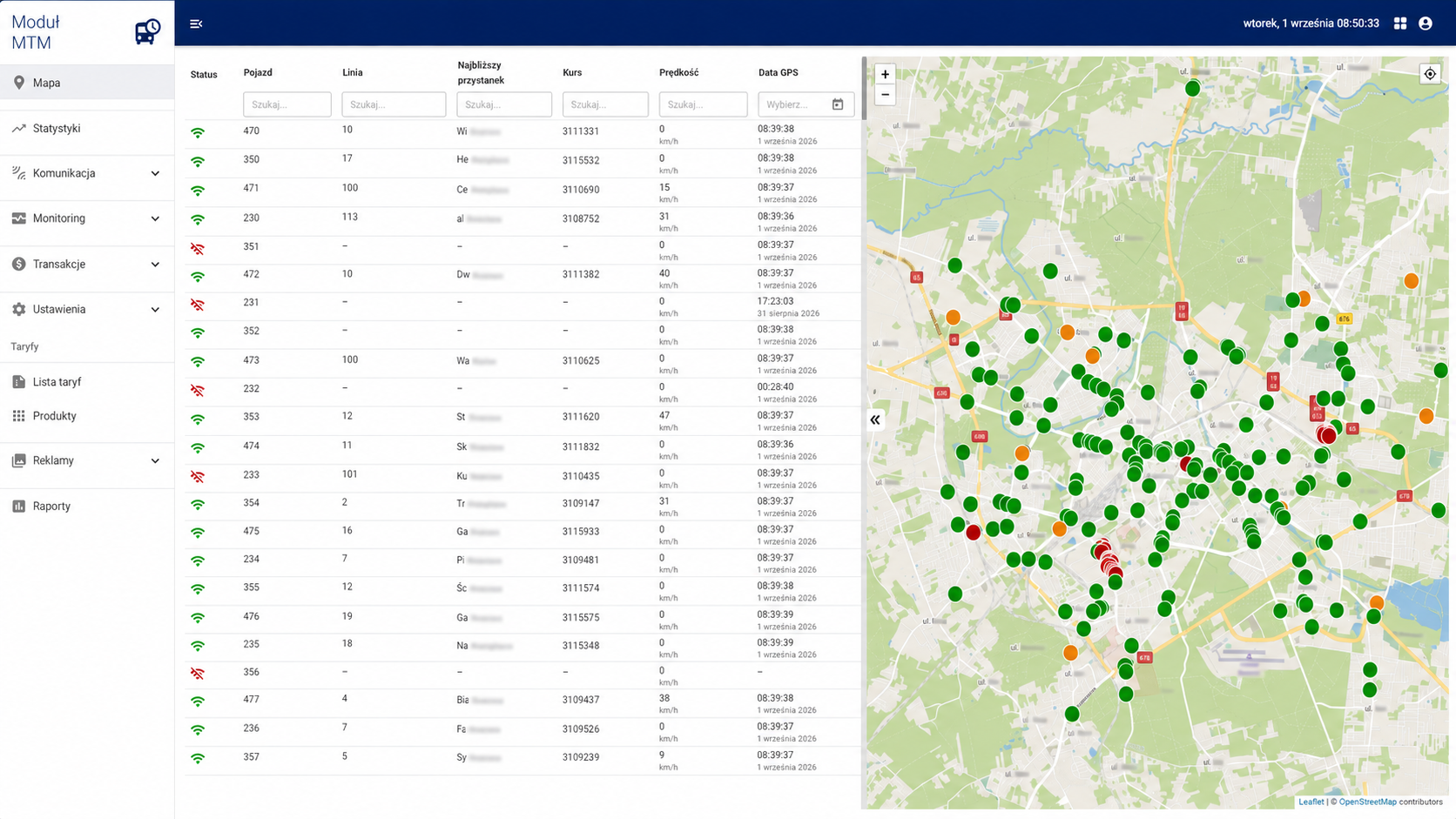
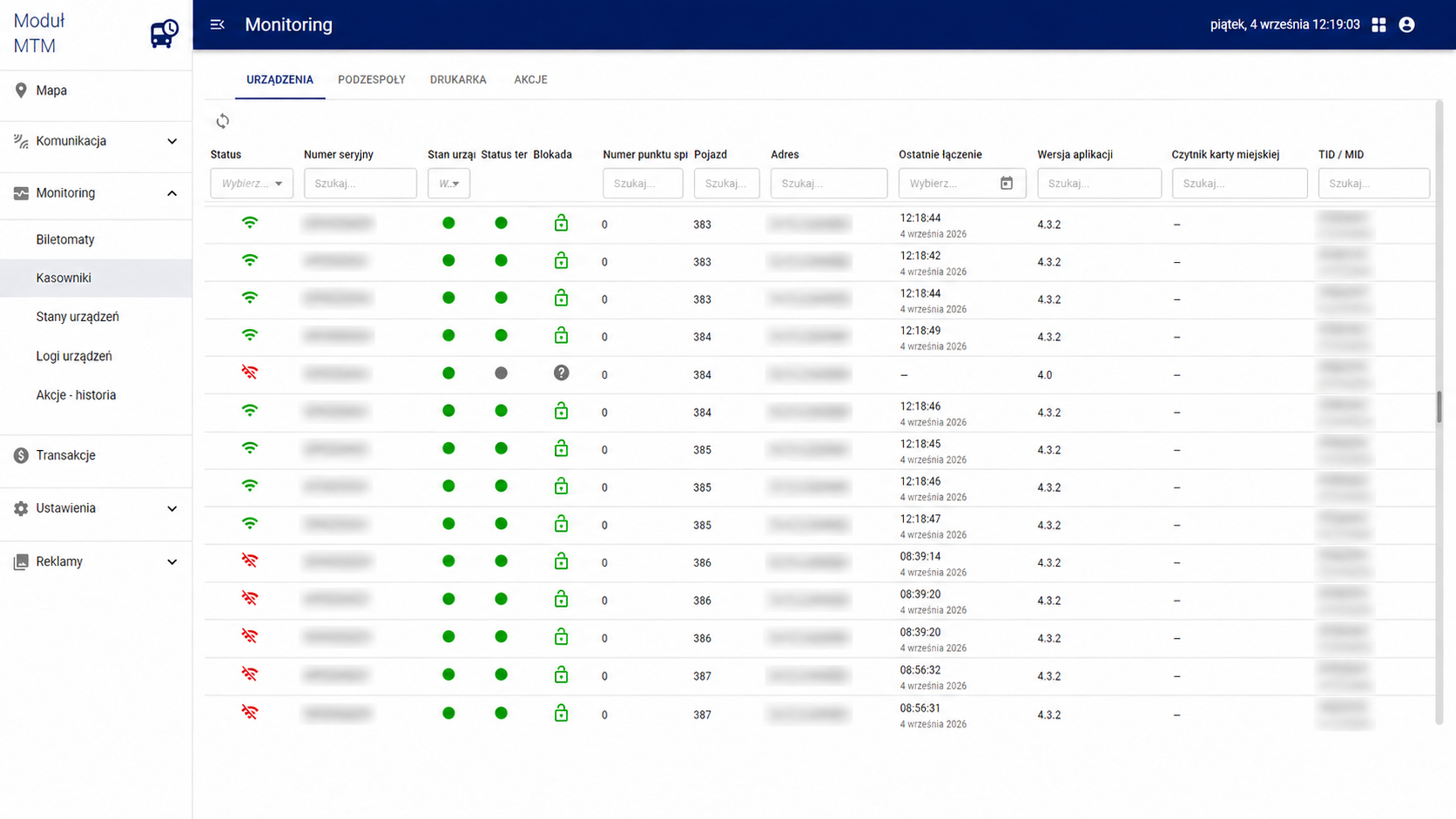
MTM allows users to track the location and status of devices on a map, together with information about the vehicle, line, direction of travel, and current position. For each ticket vending machine or validator, the system can display, among other things, communication status, time of the last connection, software version, information about locks and faults, and the condition of selected components.
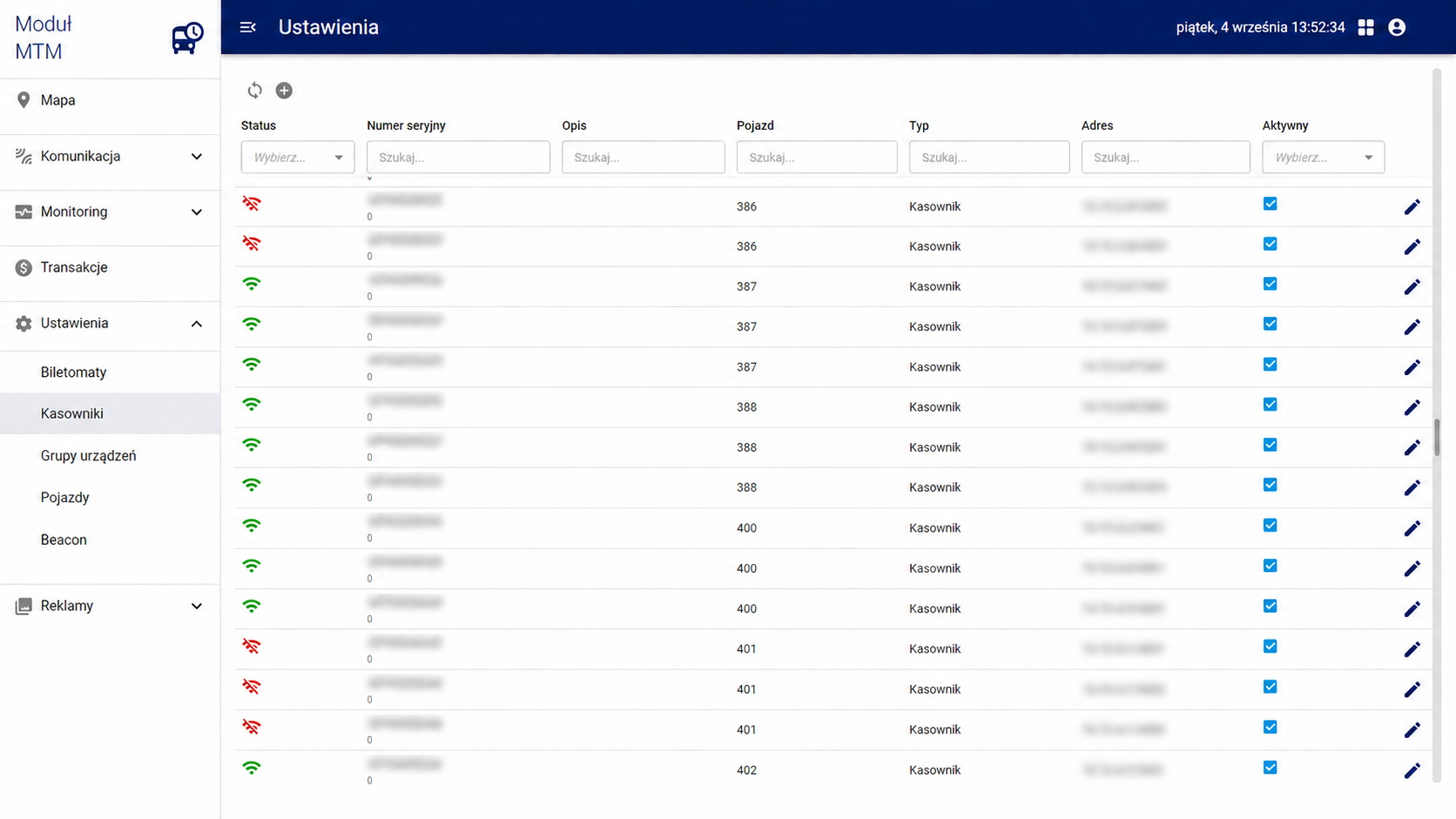
Monitoring may cover the power supply, batteries, temperature, heaters, paper level, printers, sirens, LED indicators, as well as unattended EMV payment terminals installed in the devices. This makes it possible to identify technical issues quickly and plan service activities before a fault affects ticket sales availability.
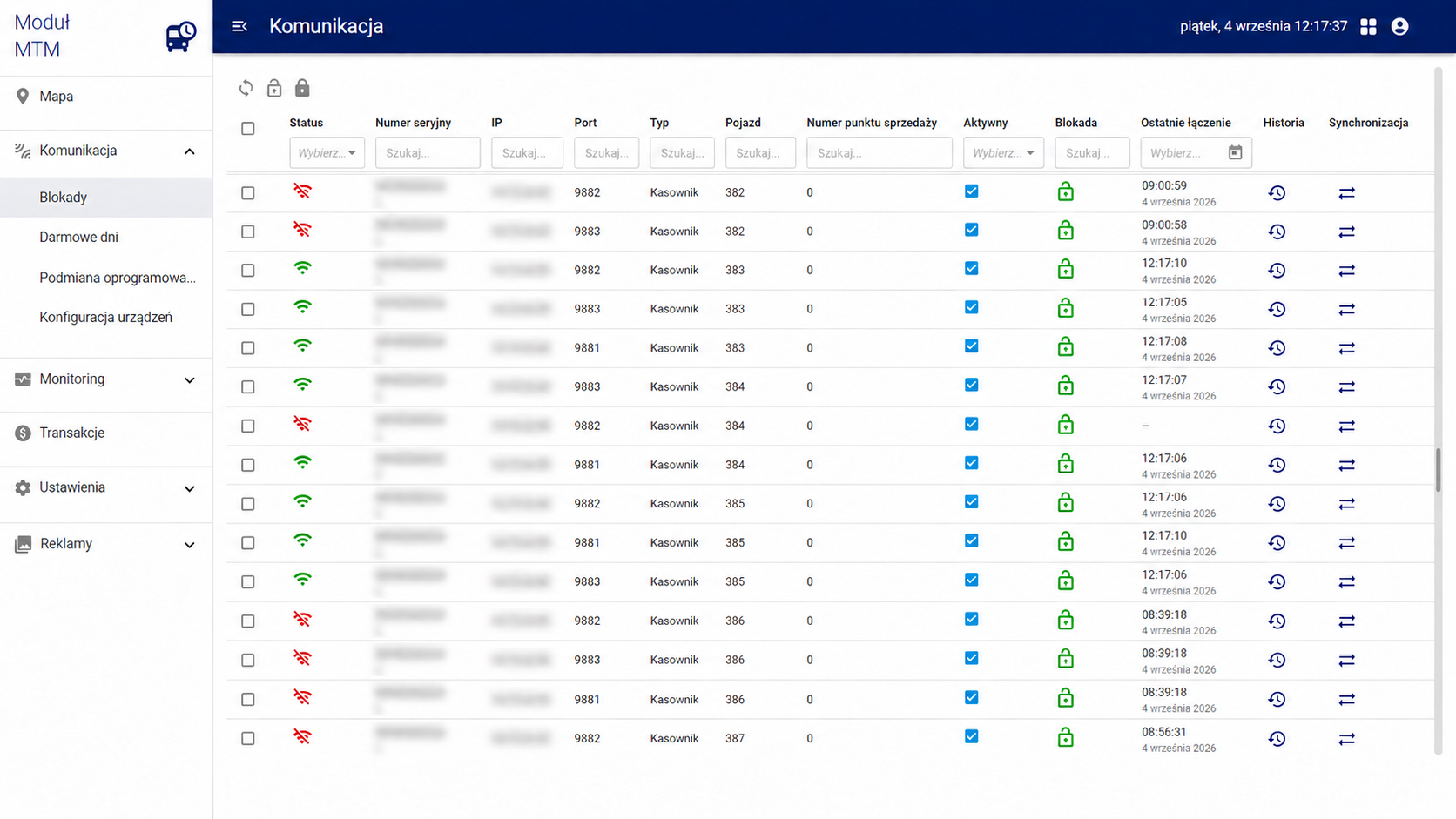
One of the key functions of MTM is remote management of devices operating in vehicles. Administrators can perform operations on both individual devices and entire groups of devices.
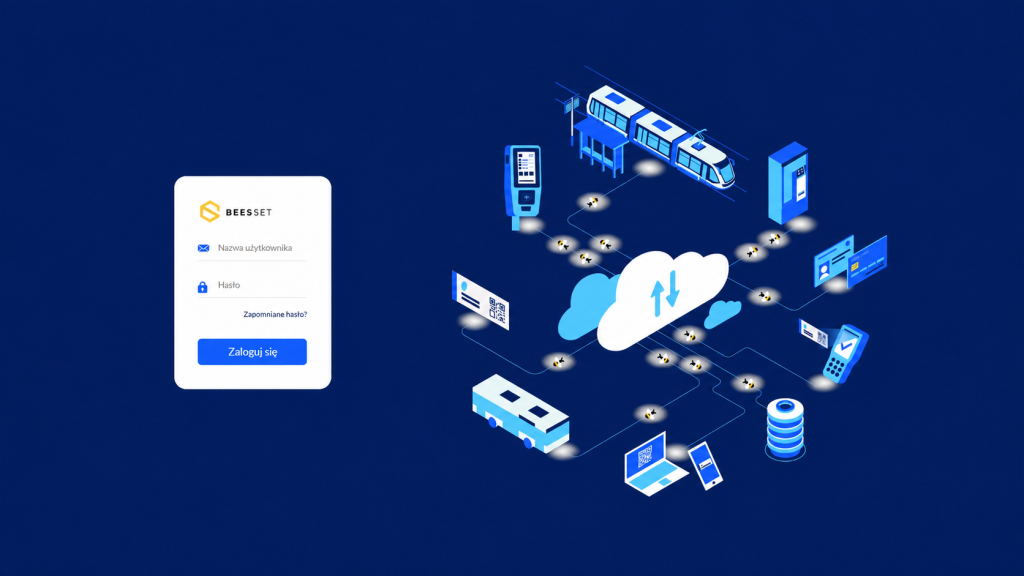
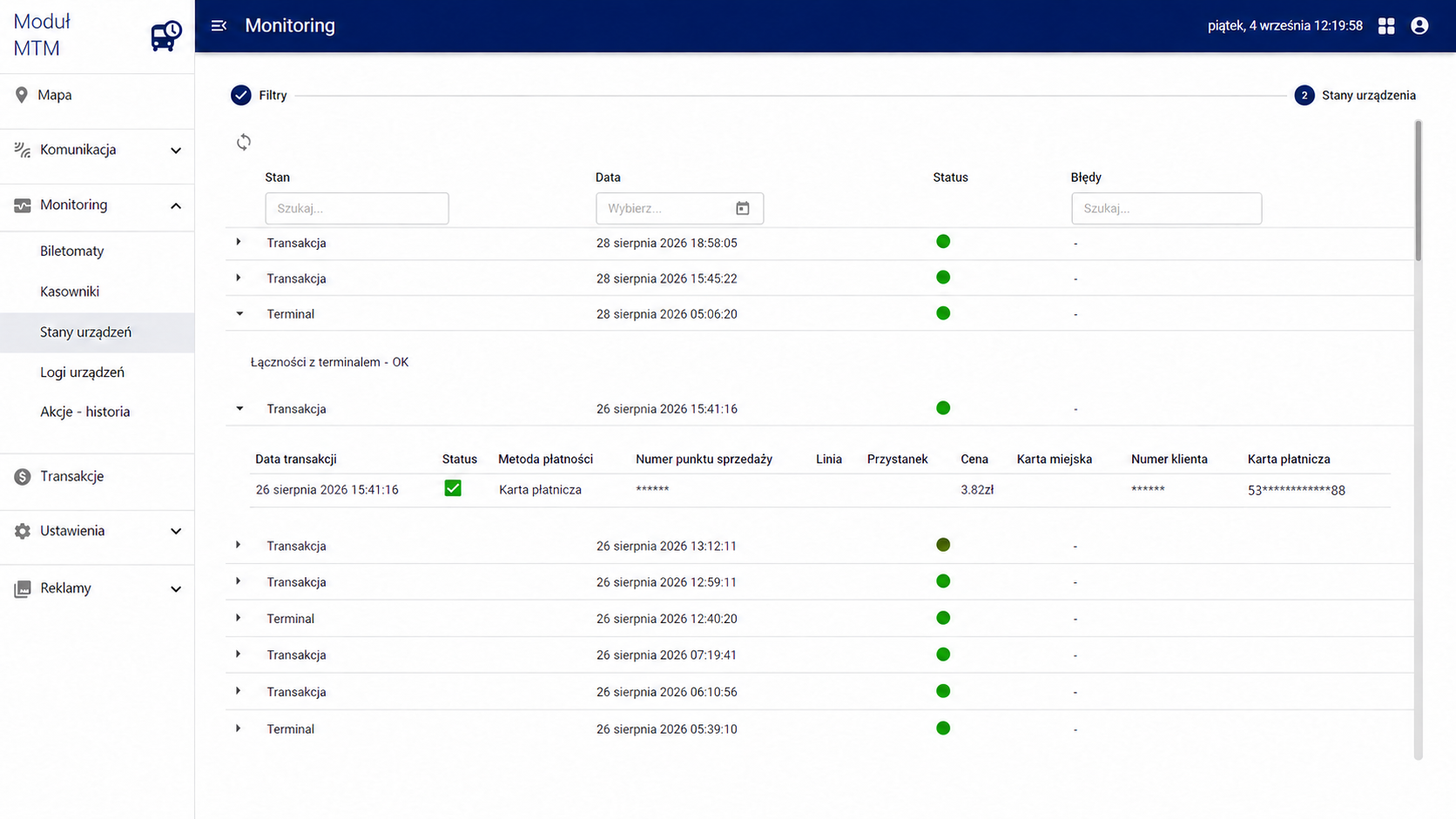
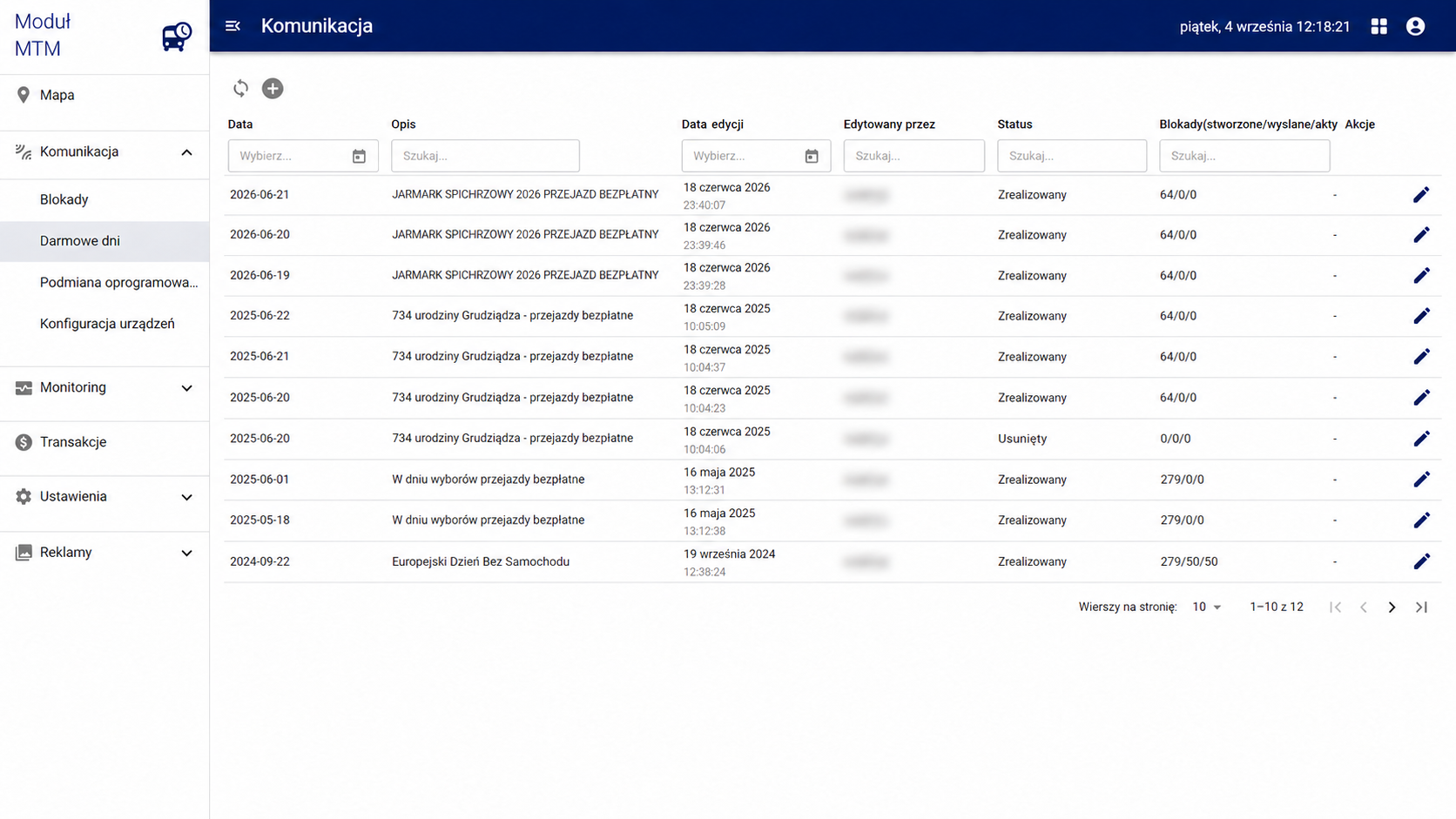
Example MTM System Screens
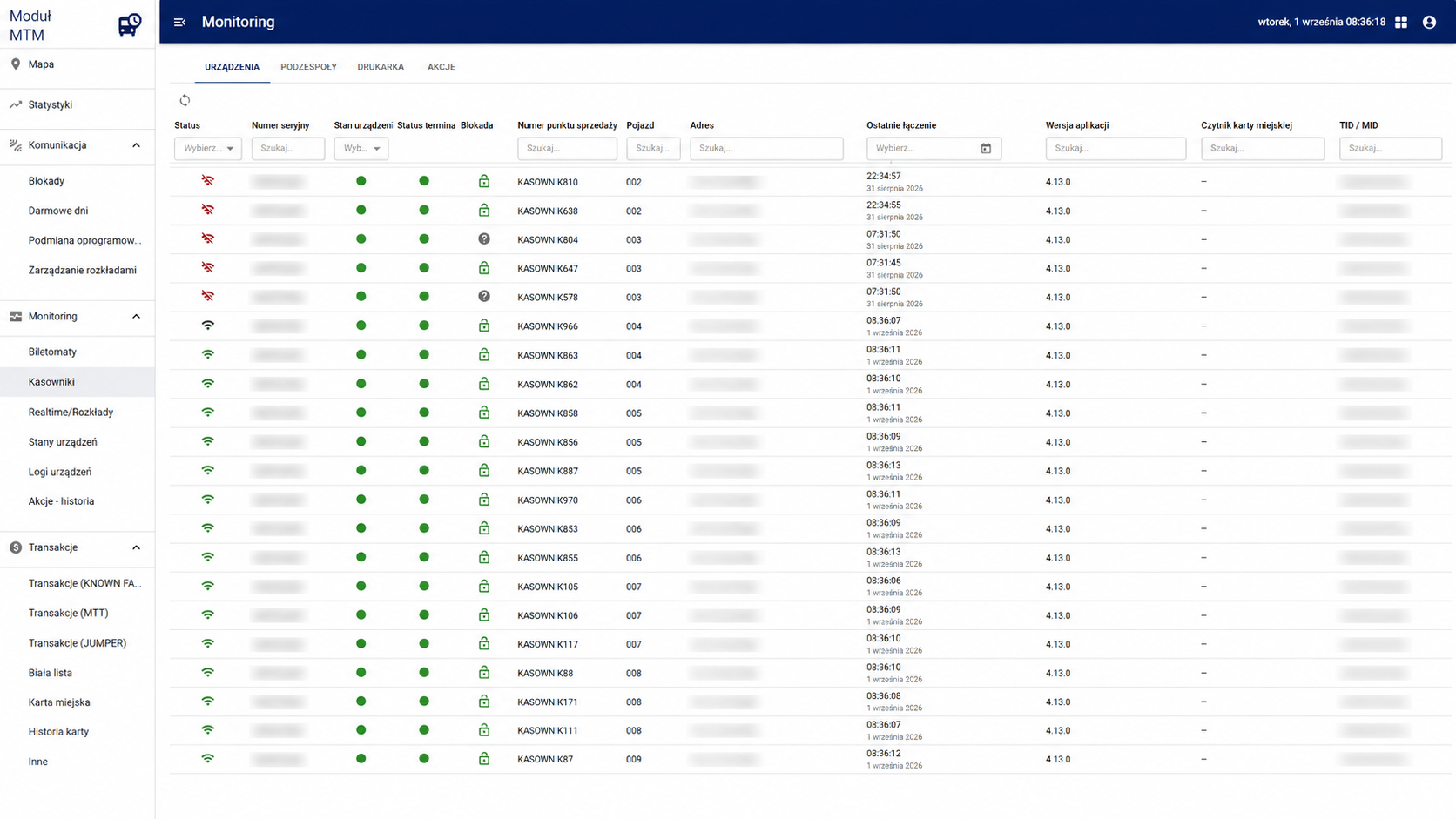
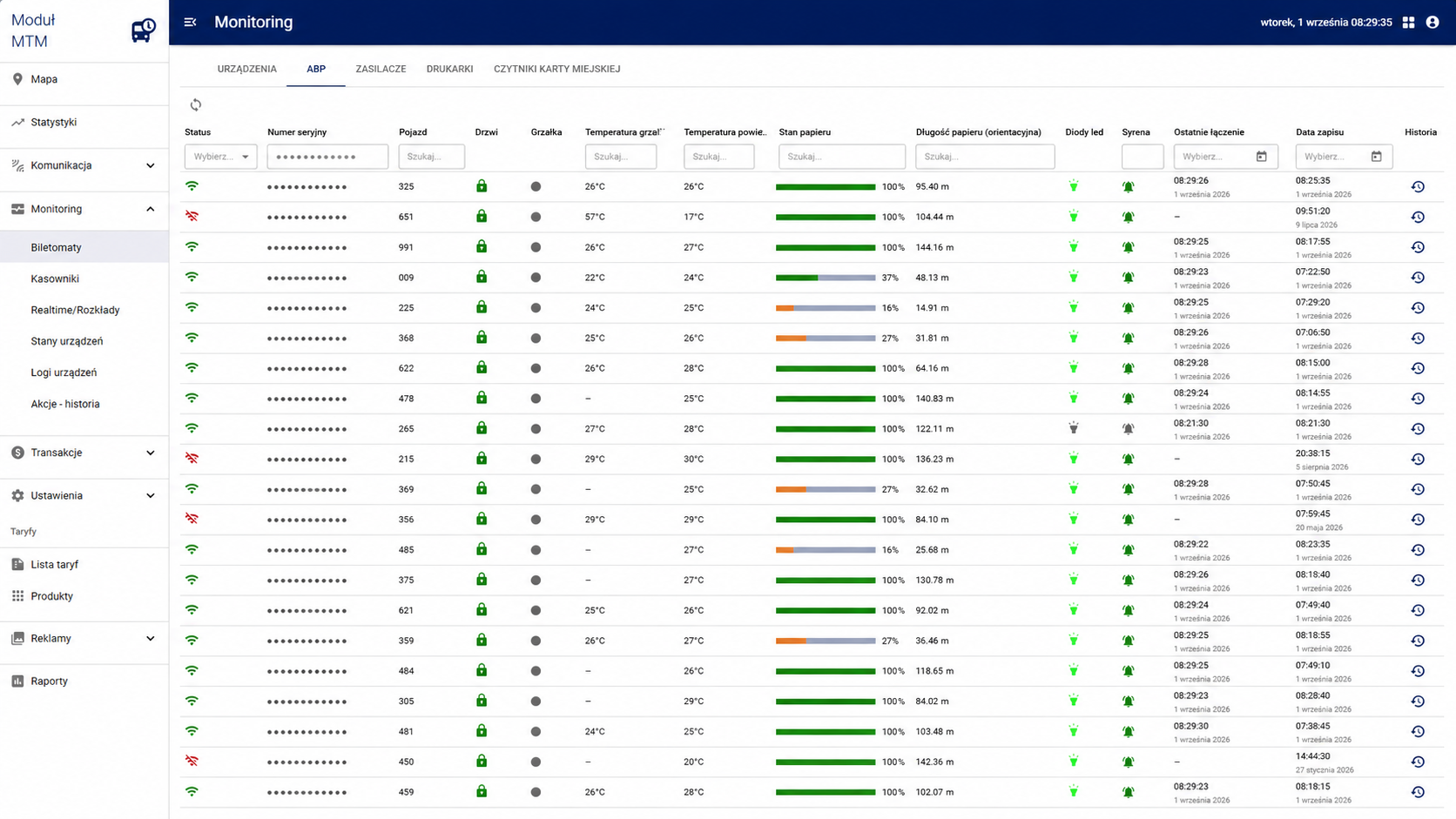
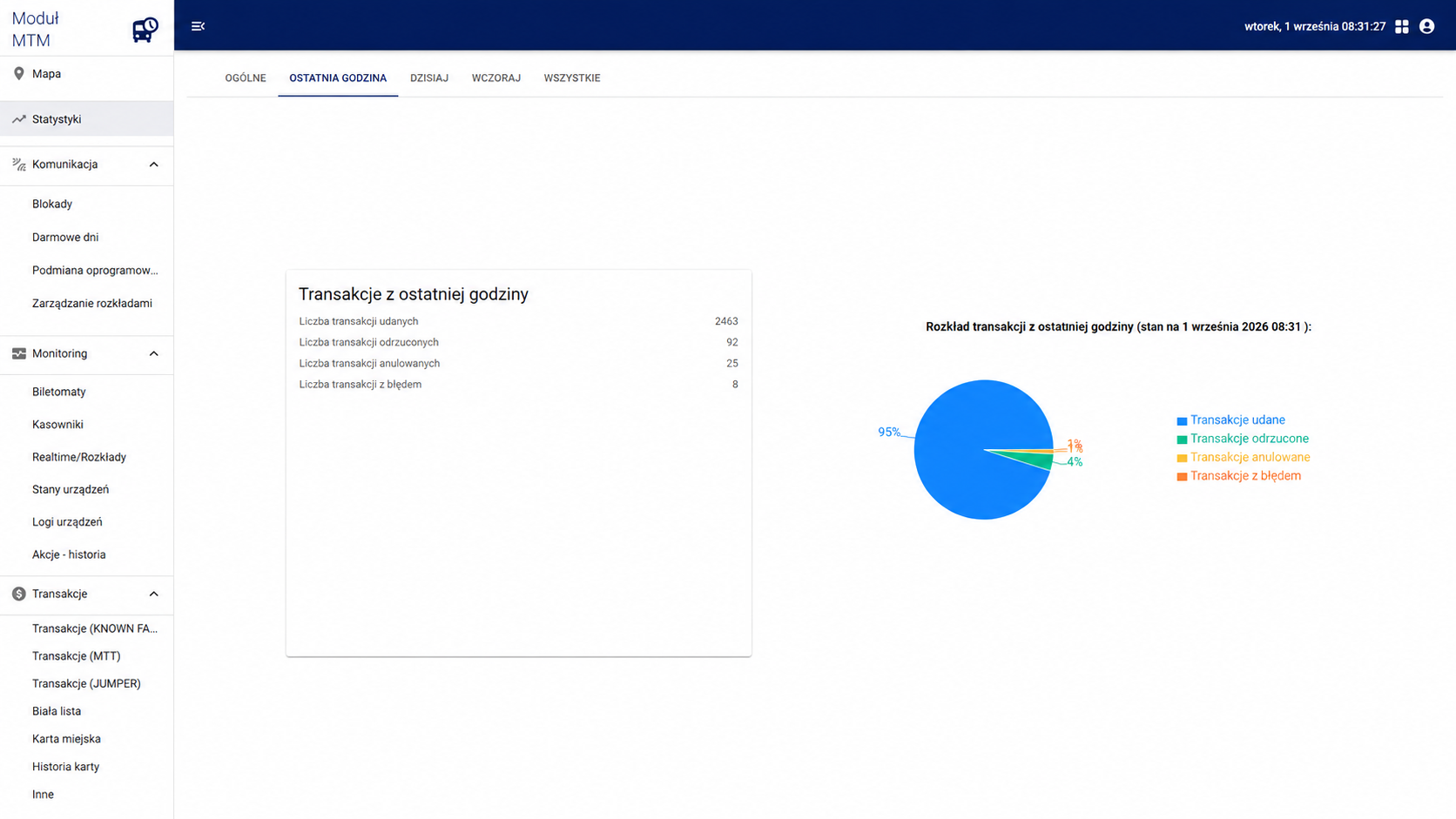
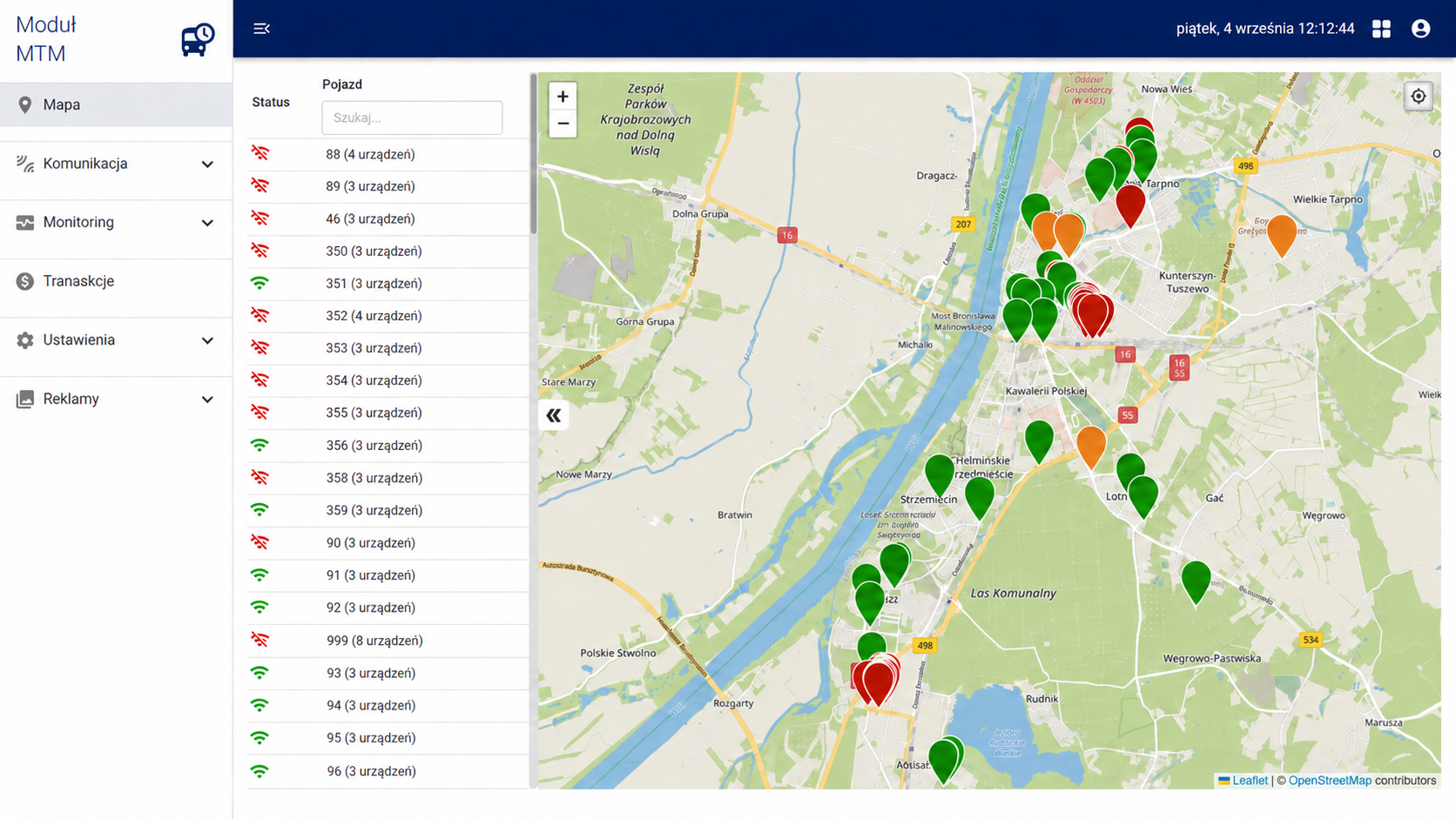
System Overview
Devices can be organized into groups, allowing configurations, software updates, and other commands to be sent simultaneously to selected parts of the fleet.
MTM serves as a central tool for managing the ticketing offer. It allows users to define products, fare structures, passenger profiles, zones, as well as product categories and groups.
For individual fare structures, users can specify the validity period, available products, prices, and VAT rates. Products can be configured according to their type, validity period, passenger profile, or fare zone. Changes to the sales offer are prepared centrally and then distributed to the appropriate devices.
In projects where ticket purchases are linked to automatic fiscalization of transactions, the system assigns a receipt or VAT receipt to each successful sale. The document can then be downloaded by the passenger as a PDF file after scanning a 2D code displayed on the device screen.
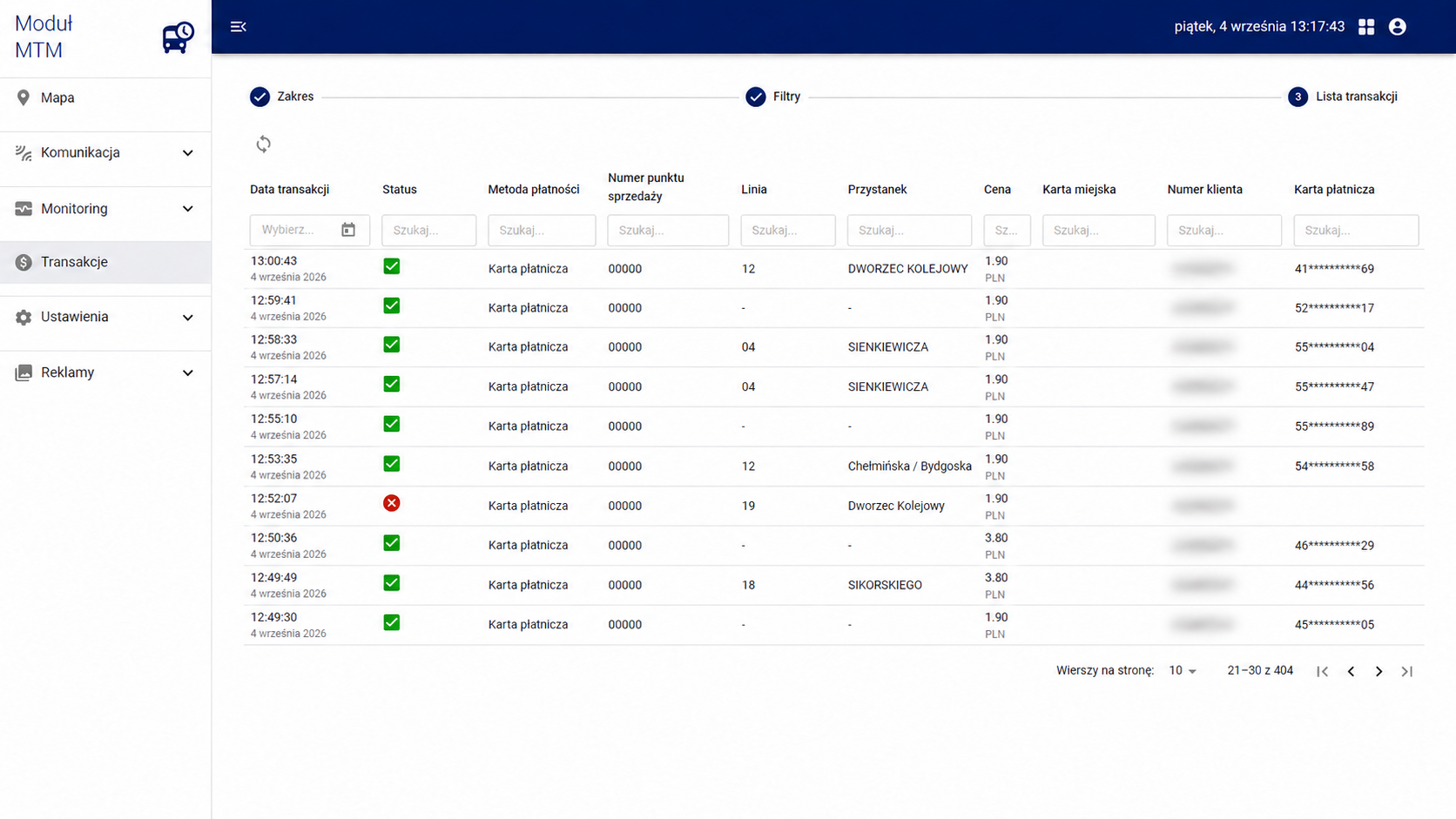
The system enables users to search and analyze transactions processed by the devices. Data can be filtered by parameters such as vehicle, device, line, ticket type, payment method, or transaction status.
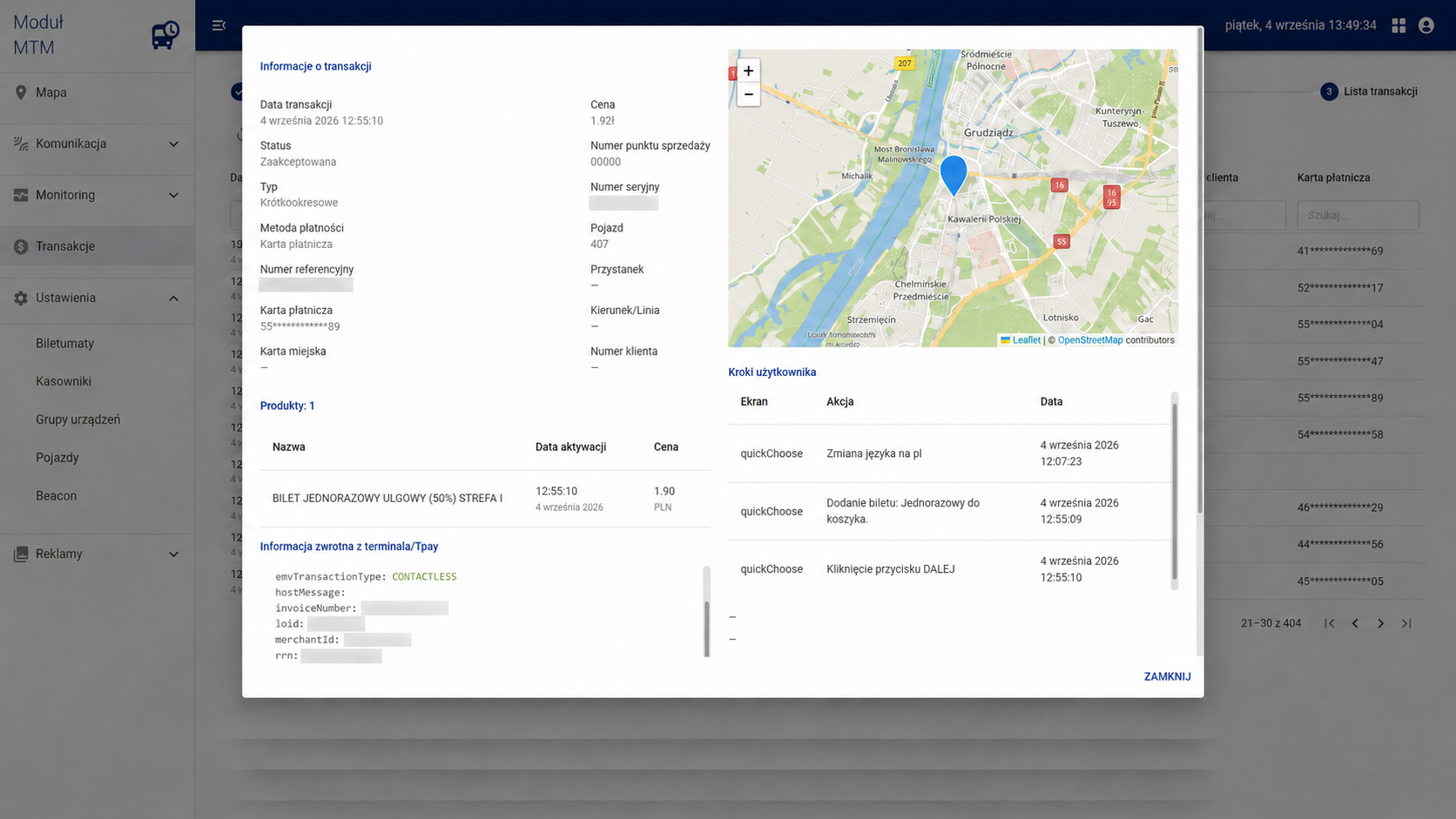
For each individual sale, detailed information is available about the transaction process, purchased products, payment, and the device on which the transaction was carried out. MTM can also display the individual steps performed by the passenger during the purchase process and show the transaction location on a map.
MTM also provides extensive tools for technical teams. It allows service technicians and their permission levels to be defined, while also supporting the recording and reporting of completed service activities.
Administrators can analyze the history of operations, download logs from specific devices, and review historical data related to their operation. This reduces troubleshooting time and limits the number of interventions requiring direct access to the vehicle.
Ticketing devices can also serve as an additional communication channel with passengers. MTM enables the management of content displayed on validator and ticket vending machine screens, including images, video materials, and HTML content.
Content can be assigned to specific devices or device groups, defined time periods and days of the week, and even geographical areas defined on the map. As a result, the displayed content can depend, for example, on the vehicle’s current location.
MTM integrates device monitoring, remote configuration, diagnostics, servicing, sales, fare management, reporting, and content management within a single platform. Access to individual functions is controlled through user accounts, roles, and assigned device groups, allowing the platform to be adapted to the organizational structure of a transport operator or authority.
The system also includes reporting mechanisms that allow data to be filtered, the scope of presented information to be customized, and reports to be exported in CSV and PDF formats.
MTM enables centralized management of a distributed fleet of ticketing devices, from configuration and sales to technical monitoring, diagnostics, and servicing, regardless of the number of vehicles and devices being managed.
MTM software can also integrate with BEESSET’s central sales data warehouse as one of the sales channels supported by the platform. This makes it possible to combine data from onboard devices with information from other channels and analyze sales within a single, consistent environment.
Merchant Portal
A solution combining many of the functions described for SECAM, the eTicket Warehouse, and MTM was the Merchant Portal, a back-office platform developed for a client in Lisbon to support sales operations and settlement processes.
The software allows the transport operator, Carris, to view payment transactions processed across the entire system, including individual taps and final charges, as well as manage the configuration of EMV terminals.

Read more about the deployment:
BEESSET Co-Develops a Fare Payment System for Carris in Lisbon | BEESSET
Similar articles
See all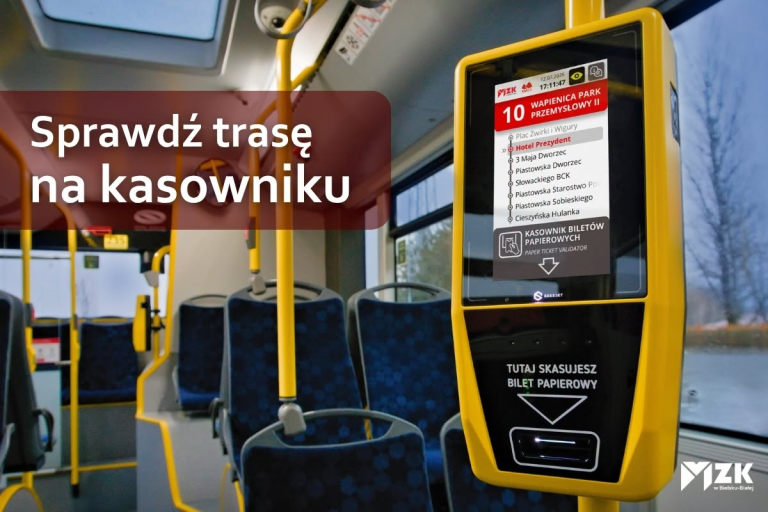
14/09/2026
New NV1 Validator Interface in MZK Bielsko-Biała Buses
As part of the continuous development of the software used in NV1 paper ticket validators installed in the newest buses operated by MZK Bielsko-Biała, together with Pixel Sp. z o.o. we have developed a new dedicated graphical interface aligned with the current visual identity. The validator screen now provides passengers not only with functions related […]
More information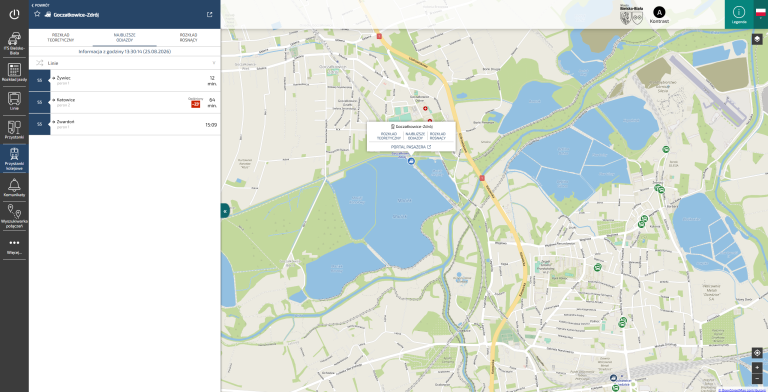
14/09/2026
New version of the rozklady.bielsko.pl portal with railway integration
As part of the continued development of ITS solutions in Bielsko-Biała, in July 2026 we delivered a new production version of the rozklady.bielsko.pl portal. The key improvement is the expansion of the journey planner to include railway services. Users can now plan their journeys using not only public transport, but also train services operated by […]
More information
17/08/2026
Beesset as part of MZK Bielsko-Biała’s digital transformation
Bielsko-Biała is one of the cities where, over the past few years, we have had the opportunity to participate in a number of projects related to the digital transformation of public transport. Working under various cooperation models and subcontracting arrangements, we have delivered solutions including passenger information systems, such as the www.rozklady.bielsko.pl portal, components of […]
More information